Saturday, October 31, 2009 @ 9:07 AM
Chemistry - POEM!(:
from chlorine to hydrogen-
in the absence of water,
we are in love.
In the absence of water,
you would not drift away
to a love affair with
more charge,
more positivity.
In the absence of water,
we are not sour.
I would not react for your touch,
wouldn’t effervesce for your attention.
In the absence of water,
we are only defined
as acidic.A poem by my friend Rohan Shah(:
- debb
Labels: Chemistry
inspires
5:39 AM
Table 19
Yes, I know we only have 18 tables. But here it is.. Table 19 - Oddly coloured stuff:

All the best! Chem O's on monday.
-Madeline
Labels: Chemistry
inspires
12:18 AM
MEP - Haydn's Publishers
1. Artaria and Co.
2. Breitkopt and Hartel
Yes, I know doing this is incredibly irritating, but I'm getting lazy D: and O levels are like, now. SORRY.
Labels: MEP
inspires
Thursday, October 29, 2009 @ 10:01 PM
MEP - Haydn Note
Haydn became Kapellmeister for the Esterhazy when Werner died in 1766
Labels: MEP
inspires
Tuesday, October 20, 2009 @ 4:00 AM
MEP - 2-Part Wring
Oh gosh, I realised I've never uploaded 2 part writing notes. Damn. Anyway, for those of you chiongers who want a quick review before the paper tomorrow (SORRY AGAIN! D:) here's a brief review of everything. The first few points are what's in the marking scheme and then it's all the rest of the things to look out for and all.
What's Not Stated Inside:Between the bass and corresponding treble notes, always have a 3rd or 6th interval.
You can have passing notes NOT on the main beats.
You can also have a sequence of quavers or semiquavers etc to one note of a chord as long as the notes are all from the stated chord.
Within each treble or bass line notes, don't have augmented 4ths, 2nds or any augmented intervals really, and I guess it's the same for diminished.

- debb
Labels: MEP
inspires
2:33 AM
LOL

Let this not happen to you during the exam :D So, study now! (:
All the best to the music people taking the 2 part writing paper tomorrow too! :D
- debb
Labels: miscellaneous
inspires
Monday, October 19, 2009 @ 1:20 AM
MEP - Composer List


Click to enlarge!(:
Through the centuries, here's the entire list of more notable composers (imo) with remarks and notes. The country's pretty important in the rare occasion that they give you two composers of the same period and you can only tell by the instrument names and expressions used in the score (or style of music for American), and the notes are important for that other occasion that they do give you two composers of the same period but, for example, one composes only chamber quartets and it's a symphony extract.
HAVE FUN(:
I hope there's nothing wrong! If there is, please tell and I'll amend.
- debb
Labels: MEP
inspires
Tuesday, October 13, 2009 @ 9:33 AM
ANALYSE THIS #3!
Postcards From Chinatownby Terence Heng
Racks of clothes along racks of clocks, as
if ticking away the fashion of the eras.
Fortune telling weight machine, I never
stepped on one before. Durian sign sale,
bicycle underneath no-bicycle sign.
Rusty trishaw parked outside renovated
lifts. And an old dental surgery somewhere
next to an older barber in the HDB.
Urn, three joss sticks burnt out sometime ago.
That was in the background where I walked,
background of the closed down emporium,
background of the foreign worker outside
an unopened shophouse. Background wet market,
background unanswered responses to the cajoling
from the hawkers in the background hawker centre.
Background, backstage.
Our performance dictates a different set of scripts.
Souvenir shops selling Chinese hats and fake
pigtails stapled to the end.
Umbrellas for holding water.
Postcards of nothing we really do.
I'll sell this as distinctly local. Our whole stage of
rojak culture and the embracement of strolling
down the street back into the tour bus. Shiny shiny
trishaws and flourescent T-shirts peddle you around
the incorporated country. This is Singapore,
ladies and gentlemen, although you don't see
the locals anywhere.
From No Other City (2000).Labels: Literature
inspires
8:21 AM
Physics - Equations List


CLICK TO ENLARGE!(:
Note: The pendulum equation, lens equation (1/u + 1/v = 1/f) and ideal gas equation (pv/t) aren't in the O level syllabus but it's useful to know for better understanding of the relationships, to help us draw the lens diagrams and to sum up the Charles, Boyle and Pressure laws of gases, respectively.
It's pretty much complete(: Might add on one or two more in the week though! Sorry there's no glossary of what the letters represent and their units, but if you're a physics student, well, you generally should know =x So, have fun! :D
- debb
Labels: Physics
inspires
8:13 AM
Physics - Electromagnetic Induction


Here's notes on electromagnetic induction as promised!(: Enjoy? Click to enlarge!(:

Reference drawings, but my handwriting's terrible. Hope you can still read it though =x
- debb
Labels: Physics
inspires
6:15 AM
Geography - Coastal Protection LORMS
Coastal Protection MethodsHard EngineeringRe-Curved Sea Wall are appropriate/mandatory in promenades and harbour situations as these bulkheads separate land from sea, protecting land and holding back sea, protecting low lying areas behind from flooding. Modern designs of concrete seawall absorb as well as resist wave attack, the wall, which is curved on the underside, deflect rather than reflect power of waves.
Very expensive to build (up to 1-2mil pounds/km) and maintain. May accelerate wave erosion due to downward movement of water and reflected waves can scour material at base and undermine the wall.
Gabions are metal cages of boulders which can be stacked to build walls, built into the cliff faces to protect cliff from the force of the waves; may be arranged as a mattress so that waves can percolate. They absorb wave energy, reduce erosion and are cheaper than sea walls and can be very effective were severe erosions is a problem.
Visually intrusive, metal cage may fail quickly & spill contents. If stacked, may move in strong waves.
Breakwaters are offshore structures of concrete or rocs that are built parallel to the coast, break the force of incoming waves, and deflect waves before they reach the shore. Slows longshore current flow, leading to deposition of sediment behind the breakwater.
Very expensive to construct (one million dollars/linear foot) and tend to deflect waves along new paths, which may cause scouring of foundations or erosion elsewhere.
Groynes are wooden, rock, steel barriers sited perpendicular to shore, designed to stop longshore drift and hence, act to build up and anchor beach material, protecting the base of cliffs/coast. They are effective at reducing erosion in the area they are constructed in by causing significant build up of beach material and slowing the speed of the waves as they break along the coast. Relatively low cost.
May starve areas further down the coast of material by stopping longshore drift, resulting in an increase in erosion in these areas.
Rip Rap/Rock Revetment are large boulders placed together on a beach. They are permeable and able to adapt to change, absorb wave energy and break the power of the waves. Look more natural.
Conclusion: Some hard coastal defence structures if proactively designed and built, such as offshore islands, can reduce erosion and increase habitat for fish/coastal birds, but may also modify sediment transport and damage beaches. The decision should result from a
cost-benefit analysis and should be a concerted decision among the
stakeholders. (Consider needs of stretch of coast)
Soft EngineeringAlso consider Soft Engineering that address erosion problems while
preserving the natural habitat for shoreline ecosystems, working with natural processes to enhance coastal resilience and are effective in the long run. It slows down coastal retreat but does not stop it. Require continual efforts and maintenance, can be expensive and resource intensive. Less expensive to implement, can involve loss of property or land.
Beach Nourishment is where beach material (sand) is added to coast, maintaining the beauty of the landscape, avoiding visual intrusion, but very expensive to maintain as longshore drift continues to move beach material down coast and hence regular replenishment is required. Miami Beach, USA.
Dune Regeneration is where a fragile environment needs careful management where sand dunes can be stabilised by planting marram grass, building walkways or duckboards to reduce trampling, and planting fences and brushwoods to reduce wind velocity and trap sand. Land use zoning also to keep areas from pressure and is only effective in Aeolian environments and where public access can be controlled. At Omaha Beach in New Zealand.
Mangroves grow in the intertidal zone and are salt tolerant, with a horizontal layering with the species that have adapted to being flooded with seawater growing near the water. Protect coast from erosion as prop roots, aerial roots and knee-like roots slow down incoming waves, reducing energy and encouraging deposition, these roots bind the soil and stabilise the coast. Fruits float also such that they are transported to newly deposited delta fronts where they colonise and protect newly developed coastal areas. Good for coastal ecosystem, fishery industry.
Only grows in sheltered tropical waters, mangroves take time/years to grow before they can be effective means for coastal protection. Planting exercises require cooperation of local people.
Along Malaysian coastline and Sulawesi, Indonesia.
Encouraging Growth of Coral Reefs whereby coral reefs protect beaches against coastal erosion reducing the speed of waves approaching the coast hence less erosion. Governments may ban fishing within certain protected areas, build wastewater treatment facilities in coastal settlements and plant artificial reefs for corals to grow. In Malaysia.
Success in the long run depends on cooperation of various groups of people and constant effort to reduce water pollution. Corals can only grow in clear water.
Hope this helps! (: If any problems or queries, please feel free to ask!
- debb
Labels: Geography
inspires
6:09 AM
Geography - River Management LORMS
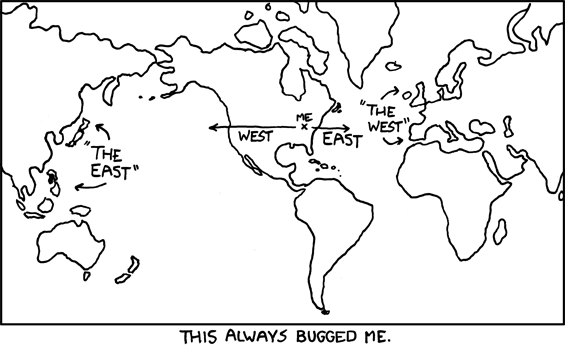
Hee! A little bit of xkcd geog before the actual LORMS(:
RIVER MANAGEMENTRiverine Floods – overflowing of water from the banks of the river onto the floodplain when carrying capacity of river has exceeded
River Management – control of flow in river; reduces floods
Re-alignment/Channel Straightening removes meanders, reduces length of river to increase speed of river and wash away sediments that have accumulated on riverbed, minimizing localised flooding. High river discharge channelled away from flood-prone area but delivered faster downstream where floods may occur. Greater river energy, more erosion, river channel deepened, greater capacity, keeps floodwaters in, reducing flood occurrence. Wetlands may dry up & shrink; river no longer flows there.
Waikanae River, New Zealand. Effective in reducing occurrence of floods, reduce loss of property such as farmland and residential land, financial losses, loss of lives.
Very costly, 1.1million New Zealand Dollars spent. Hence it may not be practical for large rivers, LDCs.
Re-sectioning/Channel Widening as rivers are widened, deepened (dredging) to contain excess water, preventing floods. River bed and banks smoothened with cement, granite; reducing friction with wetted perimeter and increasing river speed so floodwaters flow away more quickly.
Singapore River along Boat Quay to prevent flooding in CBD as this may disrupt transport, businesses; strengthening of bank will also allow usage of area next to the river for F&B outlets for tourists.
Effective in short term, but new sediments deposited requires regular removal – costly maintenance.
Raising and Strengthening of River Banks by walls of earth, rock or concrete (called dykes or embankments) being built, confining water to channels, increasing river capacity – able to hold extra water during times of high discharge – can be very effective for preventing floods.
May make floods worse if river overflows artificial higher banks with constant deposition on riverbed, making it more shallow and raising riverbed above floodplain. Floods are also sudden; harder to flee surging floodwaters. Possibility of dyke collapse if materials used are not concrete/hardy. High cost of building dykes. Built on upper stretches of rivers in Bangladesh, floods still occur at delta.
Increased time of flooding as embankments prevents backflow into river; thus areas of stagnant water are created, increasing the likelihood of diseases (cholera and malaria). Embankments may cause some wetlands to dry out leading to a loss of biodiversity.
Mississippi River, USA – reduced frequency of floods, not completely effective. 1993 major floods, by record spring rains, flooding about 8 mil acres by early August. Raging floodwaters inflicted major damage on levees, dams & floodways, ruining 12mil acres of cropland, causing over $10 billion in damage.
Huang He, China – higher dykes constantly built and supplemented in modern times by reforestation and storage reservoirs. In 1887, Huang He broke through levees killing over 1 million people.
Planting of Vegetation along the river to protect the riverbanks from erosion as roots hold onto the soil so that less sediment is transported, deposited in the riverbed reducing silting of channel. Presence of vegetation intercepts precipitation, slows down runoff, volume in river does not rise quickly to avoid floods. Increased shade from trees on riverbank may affect aquatic plants, food chains. In Ohio, US.
Salmon River, Langley, British Columbia, Canada has planting of vegetation by Trinity Western University staff and students, members of Langley Environmental Partners Society & Volunteers.
Construction of overflow/ diversion channel has the channel split into 2, allowing some water to take a quick route across the meander/former channel, at no cost – doubles water capacity but delivers water faster downstream causing problems there.
Sluice gate – controls flow of water, only measure which is adjustable and can be useful to respond to flow conditions, used in conjunction with overflow channel.
Creating floodways by designating an area along the river where no construction is allowed, a nature park where river can flood naturally. Some cities cannot afford to leave any land unused.
Constructing dams as excess water brought by heavy rain is stored in reservoirs behind dams, reducing occurrence of floods downstream. Allows flow of water to be controlled, generates HEP, but expensive, limited lifespan as accumulation of sediments behind dam raise reservoir bed. Large-scale and causes land upstream to be permanently lost. Three Gorges Dam, China; Tucurui Dam.
Tackling the causes of floods; Controlling Land Use by using land in drainage basin properly –
MOST EFFECTIVE METHOD. Proper control of lumbering, agriculture and development in a drainage basin helps to minimize rapid surface runoff into rivers,
Reduce deforestation and have afforestation RFD (replant trees on bare slopes), reducing flow into river, lengthening lag-time but other land use could be more profitable.
Educate farmers on good farming techniques; contour ploughing, cutting terrace in slopes – reduce soil erosion.
Ensure construction associated with development will not silt up rivers
Reducing consequence of floods by flood proofing properties, flood resistant structures to reduce damage, flood-warning scheme (monitoring weather patterns, issue warnings using mass media), evacuation procedures, flood insurance to recoup losses suffered, post flood management measures – shelter, food, water.
Labels: Geography
inspires
1:43 AM
Physics - Definitions Part 2
Hey (: Here's the 2nd part of the xkcd.com Physics definitions notes(:
 LIGHTLuminous
: gives off light
Non-Luminous: does not give off light
Incident Ray: Light ray hitting reflective surface
Point of Incidence: Point on reflecting surface where light ray hits
Normal: Perpendicular to surface at point of incidence
Reflected Ray: Light ray reflected from reflective surface
Angle of Incidence: Angle between incident ray and normal
Angle of Reflection: Angle between reflected ray and normal
1st Law of Reflection: Incident Ray, reflected ray and normal to the reflective surface all lie on the same plane
2nd Law of Reflection: Angle of incidence is equal to angle of reflection
Characteristics of Plane Mirror Images: virtual, upright, laterally inverted, same size as object, distance of image from mirror = distance of object from mirror
Refraction: Bending effect of light as it passes from 1 transparent medium into another.
Refractive Index: Ratio between speed of light in air or vacuum and speed of light in a medium (e.g. water's refractive index is 1.33)
Critical Angle: Angle of incidence in the obtically denser medium for which the angle of refraction in the less dense medium is 90º
Total Internal Reflection: phenomenon whereby angle of incidence in a medium is increased beyond critical angle and hence light ray is reflected back into the medium (can only occur from denser to less dense)
Convex Lens: Lens which converges rays of light that pass through it
Principal Axis: A line which passes symmetrically through the optical centre of the lens
Optical Centre: Centre of lens where any ray passing through will not be deviated
Focal Point: Point at which all rays parallel to principal axis converge to after refraction by lens
Focal Length: Distance between optical centre and focal point
Focal Plane: Plane which passes through focal point and is perpendicular to principal axis
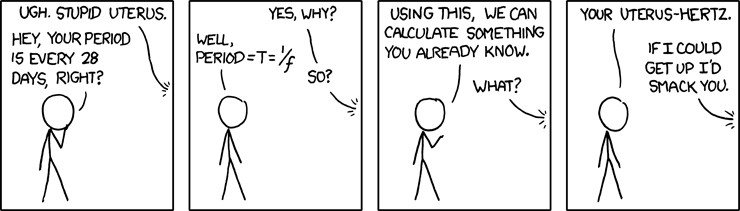 WAVESPeriodic Motion
: Motion repeated at regular intervals
Oscillation: 1 complete motion - from one extreme position to the other extreme position
Transverse Waves: Waves that travel in the direction (displacement of particles) perpendicular to the direction of vibration.
Longitudinal Waves: Waves that travel in the direction (displacement of particles) parallel to the direction of vibration
Compressions: In longitudinal waves, regions where air pressure is higher than surrounding air pressure
Rarefactions: In longitudinal waves, regions where air pressure is lower than surrounding air pressure
Crests: Highest points of transverse waves
Troughs: Lowest points of transverse waves
Phase: Any 2 points that move in the same direction and have the same speed and same displacement from rest position
Wavelength: Shortest distance between any 2 points in a wave that are in the same place in metres
Amplitude: Maximum displacement from rest (height of crest or depth of trough) in metres.
Period: Time taken for one point on a wave to move 1 complete oscillation
Frequency: Number of complete waves produced per second in hertz.
Wave speed: Distance traveled by wave in 1 second (m s-1)
Wavefront: Imaginary line on a wave that joins all points that are in same phase.
ELECTROMAGNETIC WAVESHAHA TOO BAD, I don't have definitions for this, although I have a feeling I should wait I'll go check, otherwise the rest of it from xkcd.com (: Oh, hm. There aren't any!
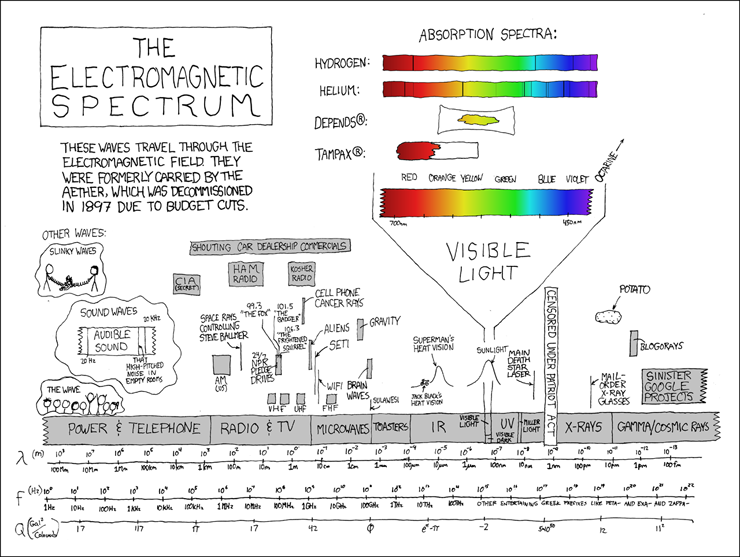
The EM waves part is actually accurate! I mean, the obviously serious parts. I trust your discernment.
SOUNDSound: Produced by vibrating sounds placed in a medium (travels fastest in solids as particles are closest together) and sound waves are an example of longitudinal waves.
Audible Sound by humans; 20-20,000Hz (below 20Hz - infrasound, and above 20,000Hz - ultrasound)
Echo: Reflection of sound
Distinct Echo: Can hear
Non-distinct Echo: Cannot hear, reverberations
Laws of Reflection apply to sound;
1. Incident, reflected wave, and normal to reflecting surface lie on the same plane
2. Angle of incident sound wave = angle of reflected sound wave
Pitch: Related to frequency. Higher frequency, higher pitch.
Loudness: Related to amplitude of sound wave. Louder, higher amplitude.
 STATIC ELECTRICITYElectrostatics
: Study of static electric charges
1 Coulomb: Quantity of electric charge that passes through a section in a circuit when a steady current of 1 ampere flows for 1 second
Electric Field: Region where electric charge experiences an electric force
Electric Fieldline: Plane in which positive charges are placed
Direction of Field: Direction of fore on a small positive charge
Strength of Electric Field: Indicated by how close the field lines are to each other.
CURRENT ELECTRICITYElectric Current: Measure of the rate of flow of electric charge through a given cross section of a conductor.
Volt: Potential difference between 2 points in a circuit is 1 V if 1 joule of electrical energy is changed to other forms of energy when 1 coulomb of charge passes from 1 point to another.
Electromotive Force: Energy given to 1 coulomb of charge so that it can travel around a complete circuit.
Potential Difference between 2 points: work done in moving 1 coulomb of charge from 1 point of lower potential to a point of higher potential.
Resistance: Ratio of potential difference across to current flowing through a component.
Resistivity: How difficult it is for an electric current to pass through a material
Ohm's Law: Current passing through a metallic conductor is directly proportional to the potential difference across its ends, provided the physical conditions are constant (e.g. temperature)
Resistance Depends On1. Length
2. Cross Sectional Area
3. Type of Material
D.C. CircuitsElectric Current: Measure of the rate of flow of electric charge through a given cross section of a conductor.
Potential Divider: Circuit with resistors arranged in series
Transducers: Electronic devices htat convert energy from 1 orm to another
Input Transducers: Convert non-electrical energy to electrical energy (e.g. thermocouples, pressure sensors, thermistors)
Output Transducers: Convert electrical energy to non-electrical energy (e.g. lamps, loudspeakers)
Light Dependent Resistor (LDR): Device that has resistance that varies with amount of light shining on it (Textbook one: higher resistance with less light). Used in lightmeters.
Thermistor: Device which changes resistance when temperature changes. (Textbook one: higher resistance with lower temperatures). Used in digital thermostats, fire alarms.
Semiconductor Diode: Device which allows current to flow easily in 1 direction
PRACTICAL ELECTRICITYCircuit Breakers: Safety devices that can switch off the electrical supply in a circuit when there is an overflow of current or small leakage current to earth
Fuses: Safety device included in an electrical circuit to prevent excessive current flow. Works together with Earth Wire.
Switches: Must be fitted onto live wire (switching off disconnects the high voltage from appliance)
Earth Wire: Low resistance wire usually connected to the metal casing of appliance and provides a conducting path for the current to flow to earth should the metal case suddenly become 'live'.
Double Insulation: safety feature in an electrical appliance that can substitute the earth wire. Electrical cable insulated from the internal components of teh appliance and internal components insulated from the external casing.
MAGNETISMRepulsion is the only test for a magnet.
Magnetic Materials: Materials attracted by magnets (e.g. steel, nickel)
Non-Magnetic Material: Materials not attracted by magnets (e.g. plastics)
Permanent Magnet: Retains its magnetism for a long time (Steel, Iron and Carbon)
Soft Magnetic Materials: Easily magnetised but do not retain magnetism such as iron - stronger induced magnet - hence making temporary magnets.
Hard Magnetic Materials: Harder to magnetise but retains magnetism such as steel (weaker induced magnet) to make permanent magnets.
Ceramic Magnet: Permanent magnet, which is hard and brittle
Magnetic Shielding: prevents surrounding magnetic fields from reaching sensitive areas of a piece of equipment whose operation may be affected by the fields. Thin sheets of soft magnetic materials divert these magnetic fields.
Magnetic Induction: Process by which a magnetic material becomes an induced magnet when placed near a permanent magnet
Magnetic Domain: A group of atomic magnets pointing in the same direction
Magnetic Saturation: Maximum strength reached. Magnet domain are pointing in the same direction
Magnetic Field: Region in which a magnetic object placed within the influence of a field experiences a magnetic force
Magnetic Flux: Invisible lines that show direction of the magnetic line of force from North Pole to South Pole of magnet
Neutral Point: Point where fields from both magnets cancel out each other therefore there is no magnetic effect.
Demagnetization: Removing magnetism from a magnet
Solenoid: Cylindrical coil of insulated copper wires
Alternating Current: Electric current whcih varies its direction many times per second.
Kay! So I've just got my Motors and Generators (in Electromagnetism) left to go!(: Will do a last post for that later tonight since it's not really part of the definitions thing, but there's an xkcd comic for it. Heh! :D
- debb
Labels: Physics
inspires
1:37 AM
Geography - Conservation of Forests LORMS
More Geography notes for LORMs!(:
- debb
CONSERVATION EFFORTSGuiding principle: Sustainable development – development that meets the needs of the present without compromising the ability of future generations to meet their own needs.
On an International Level: working with NGOs to save forest and stop illegal logging. Discussions and agreements between countries on how to save the environment including the rainforest (Kyoto Protocol & Earth Summits), World Wildlife Fund proposed scheme to make it compulsory for at least 50% of the original rainforest to be preserved in any new areas of development. Efforts from NGOs like Friends of the Earth to highlight threat to forests and the need for conservation. Forest Stewardship Council: a group of timber users, traders and representative of environmental and human-rights organizations identified the need for honest and credible system of identifying well-managed forests as acceptable sources of forest products, which includes a global consensus on what is meant by good forest management, independent audits of management and forest produce that meet these criteria will carry FSC label so that potential green consumers can identify and support efforts of these companies. Oaxaco Forest Stewardship in Mexico.
Difficult to get countries to organise, different aims, difficult with Congo area (lack of manpower, funds)
On a National Level: Responsible stewardship through policies and strict enforcement of laws that forbid indiscriminate cutting, strict issue of logging licenses. Setting aside conservation areas such as Taman Negara National Park in Peninsular Malaysia. Governments can introduce rules to achieve sustainable yields and enforce them. Malaysian Government: loggers to extract no more than 10-20% of timber from any timber concession area. When operations have finished, the logged area must be left to recover for 20-40 years. However, rules not enforced. In developed countries, rules on reforestation enforced effectively.
Conservation through specific management strategies such as setting aside nature reserves, reforestation (replanting a tree for every one cut down, fertilize soil or burn ethane to stimulate growth, research on faster rate of growth of trees. Successfully carried out in developed countries, in Malaysia where teak trees & softwood trees have been planted. Staedler’s forest conservation project in P. Malaysia), selective logging (instead of cutting down all the trees in one area, only logging of selected trees in terms of area, age of trees, economic value of trees to be carried out – limit to logging of each species. Time consuming and costly, difficult to enforce in remote forested regions)
Encouraging alternative ways to generate income such as harvest & sale of forest products (rubber tapping), ecotourism – limited number of people allowed in & frequency, good guides) to provide income for people and promote conservation. Rather than clearing large areas of forested land for cattle ranching, farmers can farm smaller areas of crops producing perfume oils or harvest natural products from the forests as it exists (e.g. Brazil nuts, wild fruits – may be feasible in the future)
On an Individual Level demand reduction through public education so that people will not cut down trees for fuel, make better use of trees that have fallen, finding substitutes for forest-derived materials, reduce level of pollution and acid rain.
Requires effort on every level for successful conservation.
Labels: Geography
inspires
1:32 AM
Geography - Deforestation LORMS
Hello!(: I haven't posted any Geog notes, so here's a couple of LORMS notes! I usually just study the LORMS questions for my geog elective exams and still manage to get an A1, so :D Hope this helps!
- debb
---------------------
Deforestation – Massive, permanent clearing and destruction of Tropical rainforest
Problems1. Loss of biomass – disrupt nutrient cycle, infertile soil, loss of agricultural land
2. Loss of biodiversity – extinction of valuable plant, animal species; may be future medical cures
3. Soil erosion – destructive landslides and flooding
4. Climate Changes – global warming and changes in precipitation
Hence the need to manage tropical rainforest to reduce, eradicate problems.
Efforts To Reduce Deforestation;Reforestation and Afforestation in Kalimantan under Forests and Land Restoration Initiative which seeks to restore 900 000Ha of land annually and put an end to soil erosion & depletion of soil fertility due to fertile top soil being washed away.
Successful especially in East Kalimantan – locals actively replanted teak trees in areas affected by forest fires, timbre companies replant and retain at least 25 commercially valuable trees/Ha in previously logged areas, pay reforestation fees to fund cost of replanting trees in logged areas.
However, rate of trees being cut down faster than replanted. Teak trees planted to restore entire forest (commercially valuable and grow fast) resulting in loss of biodiversity, as replanted forests are no more than plantations.
Controlled Logging practiced by Ministry of Forestry in Indonesia – careful management of rate of logging through law enforcement & strict control of logging licenses to minimize damage done in rainforest, education of locals to increase awareness of damage caused by extensive deforestation and research carried out to reduce extent of damage.
For instance, selective logging encouraged as sustainable method, leaving much of forest untouched and able to regenerate itself, removing economically valuable trees that have reached minimum girth – minimizes soil erosion and carried out in Danum Valley.
However, economically valuable trees removed, neighbouring trees damaged – loss of biodiversity.
Conservation where areas of forests set aside as protected nature reserves – only activities that do not damage forest allowed such as ecotourism. In 1992, Betung Kerihun Nature Reserve set up in West Kalimantan, Indonesia, extending to Brunei and Malaysia due to cooperation between governments and international NGO efforts – World Wildlife Fund. Illustrates how saving the rainforest and preventing problems of deforestation (changes in precipitation and atmospheric levels of CO2, loss of biomass) requires effort at various levels.
However, illegal logging still carried out in nature serves – lack of manpower; difficult to monitor and prevent in remote and vast rainforest. Impossible to completely eradicate problems of deforestation
Controlling Forest Fires by Indonesian government policy – illegal to clear forest by burning, measure to monitor forest fires (Integrated Forest Fires Protection System, National Fire Management Plan), seeks to educate Indonesians on damage/effects of forest fires. Hopes for reduced air pollution.
However, an ineffective measure as haze continues as annual problem; clearing forest by fire is cheapest and preferred way by plantations and traditional farmer.
Conclusion; problem of deforestation not easily resolved, especially in LDCs (lacks funds, technology), and requires cooperation on various levels.
International level: ASEAN and NGOs to highlight need for urgent efforts and pressurise governments to reduce demand for timber, ensure deforestation rates reduced.
National level: resolve of governments in implementation of policies and laws are favourable and necessary to ensure conservation and controlled logging is properly implemented.
Individual level: citizens to be educated on need to reduce deforestation. Only with concerted efforts will extensive deforestation and its destructive effects be controlled & we will see sustainable tracts of rainforest in the long run.
[Long-term vs. short-term effect, developed vs. developing countries, and ease of implementation to consider]
---------------------
Remember to twist your LORMs stuff to answer the question whatever it may be!(:
Labels: Geography
inspires
Monday, October 12, 2009 @ 9:10 AM
Physics - Cathode Ray Oscilloscope
Ahh, one last piece of physics on the Cathode Ray Oscilloscope! (:


DONE!(: Click on image to enlarge!
13 days to O's!(: JIAYOU everybody!- debb
Labels: Physics
inspires
8:24 AM
Physics - Random Questions!
So here's a couple of questions from class! (: Terribly sorry my diagrams and all aren't extremely pretty and my suction cups don't have the part to show that the air's sucked out but it's not so necessary to do the questions anyway. Have fun!(:

- debb
Labels: Physics
inspires
7:58 AM
Chemistry - Extraction of Metals
Again,
thanks to
Nicole, you have notes on Extraction of Metals too! (:


Labels: Chemistry
inspires
7:49 AM
Literature - Dr. Emerson Character Analysis
Thanks to Nicole you now have notes on
Whose Life Is It Anyway?, for the students taking Full Literature! (: So here's a character analysis on Dr. Emerson.

Labels: Literature
inspires
6:15 AM
Biology - Excretion
Hi again! :D Okay, so here's an essay I did on
excretion in January, which managed to get me a score of 9.5 upon 10 and I think I've added in the amendments already. I'd check but I don't have my file with me at the moment... so just hope so! If anything, it's just half a mark. =x
 Click to enlarge again! (:
- debb
Labels: Biology
inspires
6:07 AM
Biology - Smoking
You are also in luck, because I've actually done notes in the computer for Smoking. It's under the chapter on Respiration and Gaseous Exchange. Hope this helps too!(:
You know what to do; Click on image to
ENLARGE.
THESE NOTES WILL BRB- debb
Labels: Biology
inspires
5:48 AM
Literature - Random F451
Okay, Maddy sent me this chunk of
Concepts featured through Fahrenheit 451;- Hubris
- Androgynous
- Ambivalence
- Satire
- Anima vs Animus
- Siege Mentality
- Microcosm
- Uxorious
- Solipsism
- Dualism
- Epiphany
- Kierguard
- Volition
- Lexicon
- Allegory vs Analogy
- Vista
- Freudian Slip
- Conspiracy Theory ‘Shock Doctrine’
- Liberal Arts
- Epistemology
- Kübler-Ross model (5 stages of grief): Denial – Anger – Bargaining – Depression - Acceptance
- Rhetoric (Ethos, Pathos, Logos)
- Brain in the Vat Theory
- The Cave (Allegory used by Plato in The Republic)
- Individuation
- Anaphora
- Parallelism
- Aphorism landscape = mindscape
- Heterarchy vs Hierarchy
- Self Actualization
- Spiritualism-Materialism Dichotomy
and
Books of the Bible featured in 451: Job, Ruth Revelation, Ecclesiastes, Isaiah, Matthew, Mark. Luke and John.
I will try to find time to update, elaborate, and state where all this applies in the book, but in the meantime, Literature isn't my priority so if you're really desperate please Wikipedia and try to find it in Fahrenheit 451 yourself. Sorry! D:
- debb
Labels: Literature
inspires
5:30 AM
MEP - Haydn Essay Notes On Humour & Surprise
 [Click on image to enlarge.]
So here's the Haydn essay answers for the ACS(I) Prelims 2009, which asked for elements of humour and surprise with reference to at least 3 of Haydn's symphonies including the "London" Symphony. As you can tell, I'm getting a bit lazy to re-edit and stuff, so here it is in original form. My friend David sent it to me, and so say thanks to him if you know him o_o
Our MEP teacher has also alerted us that the interpretation of where the transition section of the Recapitulation in the 1st movement of Haydn's Symphony No. 104 varies, so if you're taking notes from here, it's how MG interprets it. Generally they won't ask you for the section if the O levels decide to test on it, so you don't have to worry.(:
- debb
Labels: MEP
inspires
5:03 AM
ANALYSE THIS #2!(:
Another local poem for the literature student.
Trees Are Only Temporaryby Leong Liew Geok
The one and a half day weekend
Past, I can no longer place the familiar
Albizia*; vanished without smoke, kaput.
Just like that, with half of Saturday,
All of Sunday, from my office window.
Monday says trees are only temporary.
Take that saga down the slope:
Three trunks shot from one spot.
No bleeding, no scars to mention;
Woodshavings mark a triple execution.
If trees could yell in decibels,
Drwon the drone of saws
In final screeching falls,
We might be less careless
To cut and carry so efficiently.
There is no place for shooting splendours
In teh fever of estates and shopping centres;
Cut to pieces, where have all the rugged gone?
Boles which leave no bloody stump,
But baldness flush to the ground?
Do not weep - crying's not in.
Do not sigh - time goes wasting by.
Screaming is unproductive,
For instant trees come
Quick from any nursery.
Trees are only temporary
In a flourishing garden city.
*Albizia is a genus of about 150 species of mostly fast-growing subtropical and tropical trees and shrubs.'
From
Love is Not Enough (1991).
Labels: Literature
inspires
4:43 AM
S.S. Overview Notes [Final]
K! Maddy sent me this to post here, so here's the final overview of S.S. for SEQ and all!(: Hope it helps. The bolded chapters at the end are those predicted to come out. They're an improved version of the older ones, so as long as you've got this you don't need the rest.(:


- debb, on behalf of maddy(:
Labels: Social Studies
inspires
1:24 AM
Physics - Definitions Part 1
So I figured I should just type out all the definitions here. ^^ ALONG WITH XKCD COMICS. HOHO. Besides that, I'm just too lazy to get a whole document done up and made prettier. =x
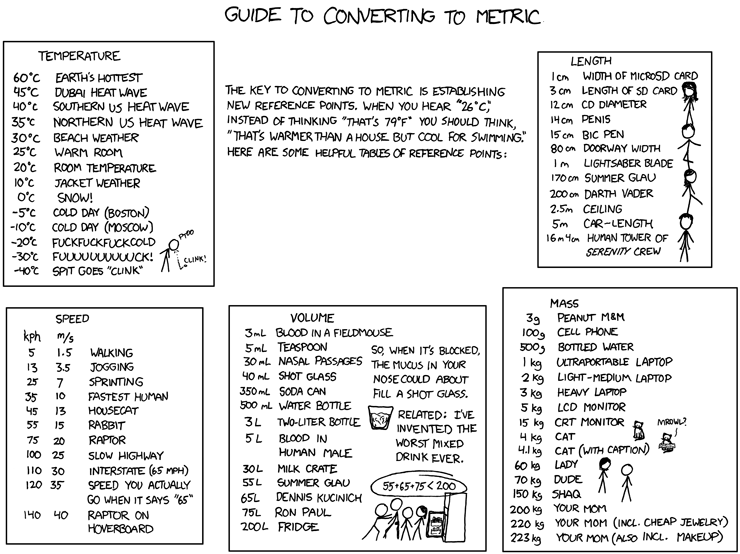 MEASUREMENTSPhysical Quantity
 is a quantity that can be measured and consists of a numerical magnitude and a unit.
Base Quantities; there's 7 of them; length (m), mass (kg), time (s), electric current (A), thermodynamic temperature (K), luminous intensity (cd) and amount of substance (mol). They have their corresponding SI Units (symbols in brackets).
Derived Quantities are derived from base quantities, such as speed (derived from length and time)
Vector Quantities have directions associated with the magnitude.
Scalar Quantities only consist of the magnitude and not the direction.
 KINEMATICS
Speed is the distance moved per unit time.
Displacement is the distance moved in a particular direction.
Velocity is the rate of change of displacement
Acceleration the rate of change of velocity.
Terminal Velocity is the maximum constant velocity with air resistance.
FORCES
Force is a push or pull that 1 object exerts on another and tends to produce a motion.
State of Equilibrium are 2 forces acting on an object in opposite directions where the forces balance out, thus the object remains at rest or continues in uniform motion in a straight line as there is no resultant moment.
Newton's 1st Law of Motion: Every object will continue in its state of rest or uniform motion in a straight line unless a resultant force acts on it to change its state.
Newton's 2nd Law of Motion: When a resultant force acts on an object of constant mass, the object will accelerate and move in the direction of the resultant force. F=ma.
Newton's 3rd Law of Motion: For every action, there is an equal and opposite reaction, and these forces act on mutually opposite bodies.
1 Newton is the force that will produce an acceleration of 1 m s-2 on a mass of 1kg.
Friction opposes motion between two surfaces in contact.
 MASS, WEIGHT & DENSITY
Mass is the amount of matter in a body (kg).
Weight is a force and has direction (N).
Density is the mass per unit volume (kg m-3).
Inertia is the reluctance of the object to change its state of rest or motion.
Gravitational Field Strength is the gravitational force acting per unit mass of an object.
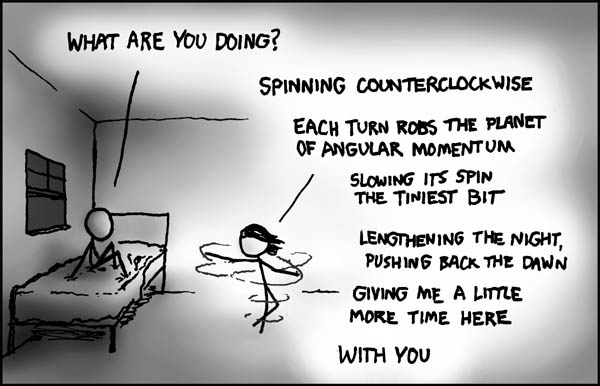 TURNING EFFECTS OF FORCES
Moment (Torque) is the turning effect of a force about a pivot, calculated by the product of the force and perpendicular distance from the pivot to the line of action.
Principle of Moments: When a body is in equilibrium, the sum of clockwise moments = the sum of anticlockwise moments about a pivot.
Centre of Gravity is the point through which an object's whole weight appears to act for any orientation of the object.
Stability is the ability of an object to return to its original position after being tilted slightly.
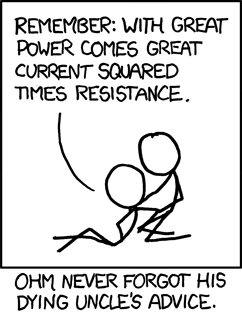 WORK, ENERGY, POWER
Work is done when a force moves its point of application in the direction of the force. If the force moves at right angles to the direction of the force, then no work has been done.
Energy is the capacity to do work (J) such as potential and kinetic energy.
Kinetic Energy is the energy possessed due to the motion of an object.
Potential Energy is the energy possessed by a body due to its position.
Principle of Conservation of Energy: Energy can neither be created nor destroyed in any process. It can be converted from 1 form to another or transferred from one body to another, but the total amount remains constant.
1 Joule is the work done by a force of 1 newton which moves an object through a distance of 1 metre in the direction of the force.
1 Watt is the rate of work done or energy conversion of 1 joule per second (unit for power).
PRESSURE
Pressure is the force acting per unit area (N m-2, or Pa).
Atmospheric Pressure at sea level is 1 atmosphere (or 101325 Pa).
TEMPERATURE
Temperature is how hot or cold an object is.
Heat is the amount of thermal energy being transferred from a hotter region to a colder region.
KINETIC MODEL OF MATTER
Brownian Motion is the random, irregular motion of smoke particles in air (due to the collision of air particles with the smoke particles).
Solids have closely packed atoms or molecules, strong intermolecular bonds, and atoms or molecules vibrate about fixed positions.
Liquids have atoms or molecules occurring in clusters, slightly farther apart as compared to solids and are free to move around between clusters.
Gases have particles or molecules very far apart with negligible forces of attraction between particles moving at high speed and in random and independent motion.
Laws for Molecular Models of an Ideal Gas1. Pressure Law: At constant volume, the pressure of a gas is proportional to ts temperature in kelvin.
2. Charles's Law: At constant pressure, the volume of a gas is proportional to its temperature in kelvin.
3. Boyle's Law: At constant temperature, the pressure of a gas is inversely proportional to its volume.
TRANSFER OF THERMAL ENERGY
Conduction is the transfer of heat through a substance due to collisions between neighbouring vibrating particles (free electron diffusion or molecular vibration).
Convection is the transfer of heat through a substance due to the movement of particles between regions of different temperatures as there is change in densities of various parts of fluids. Can occur in gas or liquid.
Convection Currents is where faster moving particles rise as they are less dense and slower moving particles in the colder regions fall as they are more dense. Cooler, denser air sinks, forcing warm, less dense air upwards.
Radiation is the emission of infra-red waves from surfaces of bodies with temperature above absolute zero (0K) without aid of a medium.
Radiant Heat is the thermal energy from infra-red waves.
Good Conductors of Heat are substances where heat can quickly transfer through.
THERMAL PROPERTIES OF MATTER
Heat Capacity is the amount of thermal energy required to raise the temperature of a body by 1K or 1ºC.
Specific Heat Capacity is the amount of thermal energy required to raise the temperature of 1kg (mass) of a substance by 1K or 1ºC.
Boiling is the process by which a liquid changes to gas at constant temperature (boiling point).
Melting is the amount of energy required to absorb in order to change 1kg of substance from solid to liquid state at melting point.
Freezing is the process by which a liquid changes to solid state at freezing point (same as melting point).
Condensation is the change of state from vapour to liquid
Evaporation is the process by which a liquid changes to vapour at temperatures below and above boiling point of the liquid.
Latent Heat is the energy released or absorbed during a change of state.
Latent Heat of Fusion is the amount of thermal energy required to change the state of matter (solid to liquid, and vice versa) without a change in temperature at melting and freezing point.
Specific Latent Heat of Fusion is the amount of thermal energy required to change 1kg of the solid to liquid or vice versa at melting point, without any change in temperature.
Latent Heat of Vaporization is the amount of thermal energy required to change the state of matter from liquid to vapour or vice versa at boiling point without any change in temperature.
Specific Latent Heat of Vaporization is the amount of thermal energy required to change 1kg of matter from liquid to vapour or vice versa at boiling point without any change in temperature.
Labels: Physics
inspires
Friday, October 9, 2009 @ 10:01 PM
Literature - Alliteration
Alliteration: Literary device where there is repetition of start consonant sounds of words in close succession.
Consonant Sounds:Plosive - p, b sounds
Fricative - f, v sounds
Palatal - t sound
Guttural - g, c sounds
Nasal - m, n sounds
Sibilant - s sound
Aspirated - h sound
For example, in:
"
Doubting,
dreaming
dreams no mortal ever
dared to
dream before" or something more relevant from Fahrenheit 451,
"Denham’s Dandy Dental Detergent, Denham’s Dentrifice Dentrifice Dentrifice."There's alliteration of plosive sounds that evoke... etc.
[Sorry, but you've got to rely on your literary analysis skills there :D Heh. Since it's dependent on the context, really, and much of it's up to your ability to BS. =x]
Labels: Literature
inspires
9:51 PM
LINK to Biology
I just stumbled upon
this site which basically covers the (entire?) syllabus for Biology O Levels!(: It's also updated in 2008, so it should be the latest syllabus. Hope you find it useful!
Labels: Biology
inspires
8:16 AM
ANALYSE THIS!(:
local poetry for the literature student.
2 mothers in a hdb playground by Arthur Yap
ah beng is so smart,
already he can watch tv and know the whole story
your kim cheong is also quite smart,
what boy is he in the exam?
this playground is not too bad, but I'm always
so worried, car here and car there.
at exam time, it's worse
because you know why?
kim cheong eats so little.
give him some complan. my ah beng was like that,
now he's different, if you give him anything
he's sure to finish it all up.
sure, sure, cheong's father buys him
vitamins but he keeps it inside his mouth
& later gives it to the cat.
i scold like mad but what for?
if I don't see it, how can I scold?
on saturday, tv showed a new type,
special for children , why don't you call
his father buy some? maybe they are better.
money's no problem, it's not that
we want to save, if we buy it
& he doesn't eat it, throwing money
into the jamban is the same.
ah beng's father spends so much,
takes out the mosaic floor & wants
to make terrazzo floor or what.
we also go new furniture, bought from diethelm
the sofa is so soft, I dare not sit, they all
sit like don't want to get up, so expensive.
nearly two thousand dollars, sure must be good.
that you can't say, my toa-soh
bought an expensive sewing machine,
after 6 months,it is already spoilt,
she took it back but.....beng,
come here, come, don't play the fool.
your tuition teacher is coming,
wah, kim cheong, now you're quite big.
come cheong, quick go home and bathe.
ah pah wants to take you chya-hong in a new motor-car
from down the line (1980)
Labels: Literature
inspires